-
Veolia trials C-Capture non-amine CO2 capture at Sheffield research facility
Date posted:
-
-
-
Post Author
Greg Kelsall
-
-
![]()
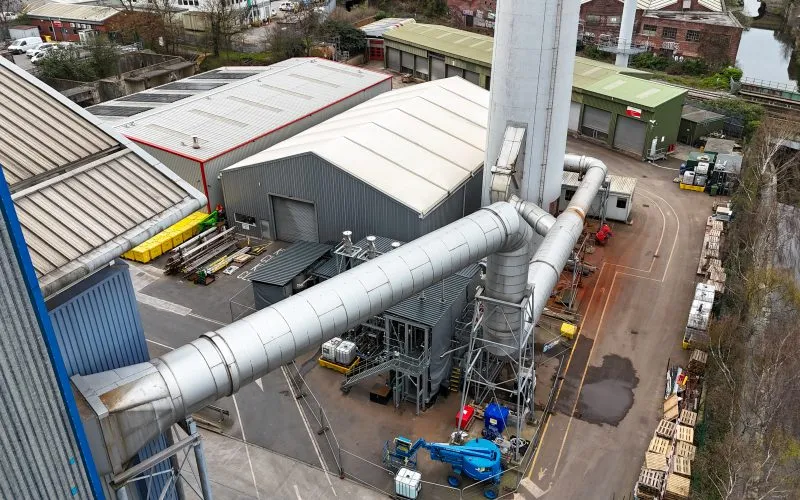
Resource management company Veolia and Sheffield City Council have launched a 2-year trial of a next-generation carbon capture system at the Sheffield Energy Recovery Facility (ERF), marking a UK first for the waste sector.
The demonstration project tests a novel non-amine solvent developed by C-Capture and the University of Leeds, offering an alternative to traditional amine-based capture systems.
Currently capturing up to one metric ton of CO2 per day from the facility’s flue gas, the modular technology absorbs carbon before it enters the atmosphere, using a solvent designed for efficient regeneration and reuse.
As part of Veolia’s broader GreenUp strategic program, the trial aims to evaluate lower-cost, safer, and more energy-efficient carbon capture solutions for hard-to-abate industrial emissions.
The captured CO2 will initially be released during testing to validate performance. At this stage, the objective is to validate how effectively the system captures CO2 and how efficiently the solvent can be regenerated for repeated use. Longer term, the aim is to demonstrate the economic viability of scaling the technology to capture, store and utilise carbon from the waste management facility.
Greg Searle, Commercial Director, C-Capture, said, “Successfully operating our technology at the Sheffield site is a major milestone. It demonstrates not only the scalability of our non-amine approach, but also its real-world advantages in energy efficiency, cost, and safety—particularly for challenging applications like energy-from-waste facilities. Veolia has been an excellent and progressive host, providing the ideal environment to demonstrate our technology.”
This demonstration project represents an important step in assessing the role carbon capture technologies can play in decarbonising hard-to-abate emissions. Rather than a standalone answer to climate change, these technologies represent a complementary solution alongside waste prevention, increased recycling, eco-design, and other measures to reduce fossil carbon entering the waste stream.
While the initial results are promising, this pilot also reflects the current stage of carbon capture technologies. Their large-scale deployment will depend on the availability of supporting infrastructure, appropriate regulatory frameworks, viable business models and continued public investment.