-
BKV begins commercial operations at two CCS projects in Texas
Date posted:
-
-
-
Post Author
Greg Kelsall
-
-
![]()
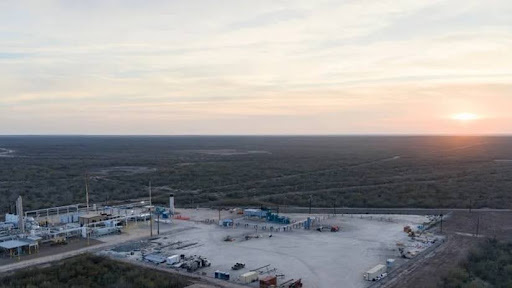
BKV recently announced the successful start-up of its Eagle Ford carbon capture and sequestration (CCS) facility. Eagle Ford is the first new operational CCS facility under BKV’s strategic joint venture with Copenhagen Infrastructure Partners (CIP), on behalf of its Energy Transition Fund I, since the inclusion of Barnett Zero in the joint venture. The facility was developed in collaboration with a leading diversified midstream energy company and captures CO2 from a natural gas processing plant that processes Eagle Ford Shale production.
BKV acquires the CO2 waste stream from the plant, then compresses and transports it to an injection well at an adjacent site, where it is permanently stored underground. The facility will store approximately 90 kt CO2/y, with BKV initially retaining all environmental credits generated by the project. The project reached final investment decision in mid-December 2024, received Class II injection well approval from the Texas Railroad Commission, and received monitoring, reporting, and verification plan approval from the United States Environmental Protection Agency.
“The successful launch of the Eagle Ford project represents an important milestone for our joint venture with BKV and validates the operational excellence we anticipated from this partnership,” said Karlis Povisilis, Partner at CIP.
The Company is progressing additional CCS projects through various stages of development and execution as it works toward its previously announced goal of achieving a 1.5 MtCO2/y injection rate by 2028.
The Cotton Cove facility, located in the Fort Worth Basin near Fort Worth, Texas, and the Eagle Ford facility, located near Freer in South Texas, together will store over 120 ktCO2/y.
Cotton Cove, a strategic co-development project between BKV and Banpu Power US, captures and sequesters CO2 emissions from BKV’s co-located, owned, and operated midstream plant via an underground Class II injection well in deep geologic formations. The facility is expected to capture and store approximately 32 ktCO2/y over its operational lifespan.