
-
Research on the emission of nitrogen oxide from the co-firing of CH4 and NH3 on a designed swirl burner
Date posted:
-
-
Post Author
Tracey Biller
-
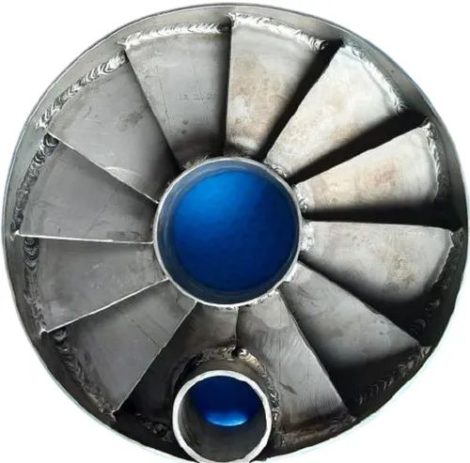
Amid the urgent need for energy structure transformation, the co-combustion of natural gas and ammonia has attracted considerable attention as it can significantly reduce carbon emissions while avoiding the difficulty of igniting ammonia during combustion. It is crucial to effectively reduce nitrogen oxide (NO) emissions for the co-firing system to achieve efficient and clean combustion.
In this study, a combustion experiment bench was set up to systematically investigate the effects of different factors, such as gas injection mode, swirl intensity, and ammonia heat ratio, on NO emissions in the co-combustion of natural gas and ammonia.
The results show that the lowest NO emissions occur when natural gas is directly injected into the outer channel while ammonia is swirled into the inner channel, with a reduction of over 50% compared to other high-emission conditions. Meanwhile, the same kind of gas partial swirl and partial axial injected into the combustion chamber led to higher NO emission than that in a unified method. Additionally, NO emissions increase initially and then decrease with the increase of the ammonia heat ratio, with the peak value varying from 0.1 to 0.3 depending on the relative positions of natural gas and ammonia.
These conclusions can provide guidance for industrial applications and promote the industrial application of zero-carbon ammonia fuel.