-
New Air Liquide Holcim agreement targets 1.1m ton annual CO₂ capture at Belgian cement plant
Date posted:
-
-
Post Author
Tracey Biller
-
![]()
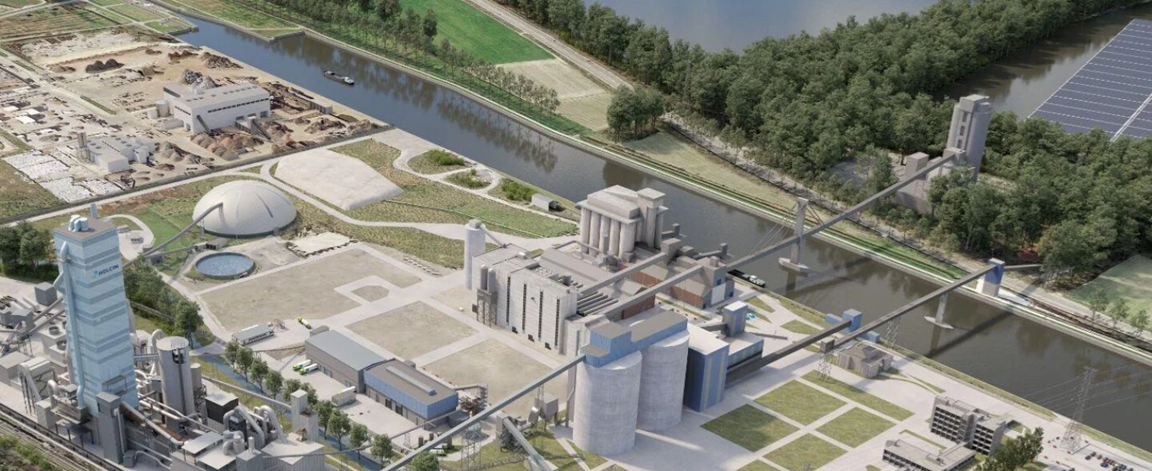
Air Liquide and Holcim have inked an agreement to develop a state-of-the-art carbon capture solution for Holcim’s near-zero cement plant at Obourg in Belgium.
Under the agreement, Air Liquide will supply the necessary oxygen for Holcim’s oxyfuel-ready clinker production line, and will also provide its proprietary Cryocap™ OXY technology to enable the capture of CO₂ emissions with high efficiency. The captured CO₂ will be transported via pipelines to a CO₂ export hub and shipped to permanent offshore storage in the North Sea.
In a press statement, Air Liquide said the agreement aims to transform the Obourg plant into a leading large-scale near-zero cement production facility, and is a significant milestone for the project. However, the Final Investment Decision (FID) remains subject to additional effective partnerships across the value chain, as well as public sector support for infrastructure regulation and the provision of derisking mechanisms.
With a goal to capture 1.1 million tons of CO₂ per year, this collaboration is part of Holcim’s GO4ZERO investment program, which will enable the company to achieve carbon neutrality in Belgium by the end of the decade, significantly contributing to the EU 2050 net zero target.
Émilie Mouren-Renouard, Air Liquide Executive Committee member and supervisor of European operations said: “The transition toward a low-carbon industry is a long-term endeavor that requires steady collaboration and public support in its initial phase. For many years, Air Liquide has been committed to decarbonize industrial sectors such as the cement industry, with the development of its visionary and advanced carbon capture technologies. Alongside our partner Holcim, we share the same ambition and this new milestone agreement for the pioneering GO4ZERO project is a powerful signal for Belgium’s industrial decarbonization and energy transition.”
For policy context and a strategic perspective, read this article.