
-
Key CO2 storage hubs identified in global CCUS study
Date posted:
-
-
Post Author
Tracey Biller
-
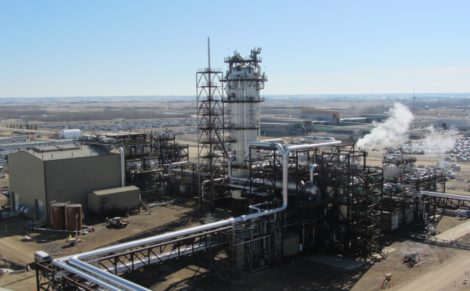
An industry consortium developing a first-of-its-kind study of potential carbon capture, utilisation and storage (CCUS) sites in Asia has identified five hubs after an assessment of more than 3,000 locations.
The consortium comprises leading steelmakers ArcelorMittal, Nippon Steel India, JSW Steel, Hyundai Steel Company, and other value chain players committed to strong industry collaboration in advancing CCUS pathways across hard-to-abate sectors, including steel, cement, and chemicals. Their focus is on reducing emissions within the steel sector, which is estimated to be responsible for between seven and 11% of global CO2.
The preferred hubs were selected during a prefeasibility study launched by the group in August 2025, and represent regional and international locations in Indonesia, Malaysia, Australia, and India. They include both onshore and offshore storage.
Selection criteria included sites’ potential performance across the full CCUS value chain, that is capture, aggregation, transport, export to storage, utilisation approaches including technology and commercial readiness and market evaluation, and the policy and commercial conditions needed for deployment.
Phase 2 of the Study will undertake detailed engineering and commercial analysis of the five shortlisted hubs. This includes maturing engineering definition and developing potential implementation roadmaps to address key opportunities and challenges. The work will culminate in conceptual development plans outlining the business case, value chain design, CO₂ forecasts, and potential pathways to abatement realisation for each hub.
The CCUS Hub Study is project managed by Hatch in collaboration with Pace CCS, McDaniel, and the Global CCS Institute.
Says Kobe Steel Ltd. Executive Officer for Technology Strategy & Planning Yoichiro Yamazaki, “Decarbonising hard-to-abate industries will require scalable solutions, collaboration, and enabling policy and regulatory frameworks. The Study has reached an important milestone and provides a strong foundation for further technical definition going forward.”
BHP Vice President Marketing Sustainability Dr Ben Ellis, says, “With more than 1 billion tonnes of production a year in Asia coming from blast furnace capacity that is relatively early in its production life, it’s important for industry to progress technologies to lower the emissions intensity of existing steelmaking assets while new commercial pathways to decarbonise steelmaking are developed over time.
“Innovative solutions—like the potential of CCUS—are an essential part of decarbonising hard-to-abate sectors such as steelmaking. This study will play an important role in leveraging shared knowledge and resources across the industry with many of the world’s leading steelmakers mentioning carbon capture, utilisation and storage (CCUS) in their decarbonisation plans.”