
-
Carbon capture trial shows potential to significantly reduce CO₂ intensity in steel production
Date posted:
-
-
Post Author
Tracey Biller
-
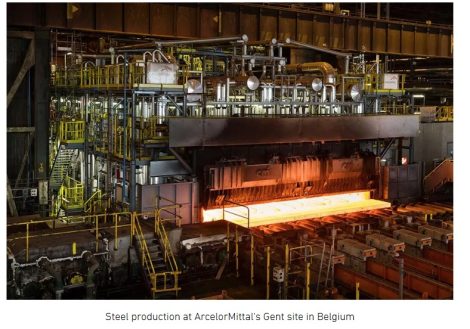
An industrial consortium comprising ArcelorMittal, Mitsubishi Heavy Industries (MHI), BHP, and Mitsubishi Development Pty Ltd (MDP) has achieved CO2 capture rates exceeding 90 per cent during an advanced carbon capture demonstration at ArcelorMittal’s integrated steel plant in Gent, Belgium.
Phase one of the pilot project involved over 4500 hours of operational testing on pre-combustion blast furnace off-gas using MHI’s Advanced KM CDR Process™.
Assessments based on the trial results indicate that applying this technology at full scale to the pre-combustion blast furnace off-gas could reduce the CO2 intensity at the Gent site by up to 24%. If the technology is further applied across multiple emission points in the steelmaking plant, the approach could support progress towards near zero emissions intensity.
The blast furnace test demonstrated the technical feasibility of applying MHI’s carbon capture technology in the steel sector at facilities like ArcelorMittal’s, and increased confidence in the potential application of this technology across the sector.
Building on the phase 1 progress, the demonstration’s second phase will capture CO₂ from gases produced by the hot strip mill reheating furnace (post-combustion). The hot strip mill reheating furnace uses a blend of by-product gases including coke oven gas, blast furnace off-gas, and basic oxygen furnace gas together with natural gas. As such, phase 2 of the trial will assess the performance of MHI’s technology under a different and more dynamic flue-gas profile, providing further data on the integration of carbon capture across multiple emission points or processes within an integrated steelworks.
The results will inform updated engineering and deployment studies for future full-scale applications.
Dr Ben Ellis, Vice President Marketing Sustainability, BHP, said: “The results of this trial are very promising and demonstrate the abatement potential of the blast furnace and integrated steelmaking route. Through this partnership, we have tested a pathway to meaningful emissions reductions in the near term, and a potential lever for near-zero emissions blast furnace steelmaking longer term.
“With around 70 per cent of global steel production from blast furnace steelmaking today, and anticipation for the route to remain a key steelmaking process for decades to come, it is critical that we work to reduce emissions from the blast furnace process while developing alternate steelmaking pathways.”