
-
IHI and GE Vernova demonstrate 100% ammonia‑fired F‑class gas turbine
Date posted:
-
-
-
Post Author
Greg Kelsall
-
-
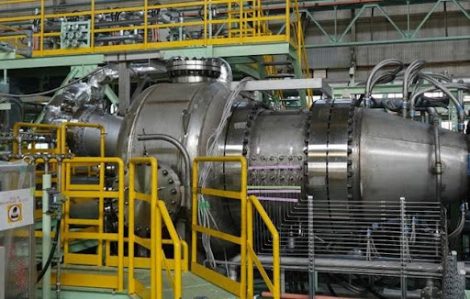
IHI Corporation (IHI) and GE Vernova announced this week that they have successfully tested 100% ammonia combustion for GE Vernova’s F‑class gas turbines. Emission levels achieved during the test were described as ‘aligning with the companies’ development roadmap towards the goal of a 100% ammonia-fired gas turbine, with the aim of achieving commercial deployment by 2030’. The demonstration was conducted at IHI’s purpose-built test facility, engineered to replicate GE Vernova’s F-class gas turbine operating conditions.
“An essential piece of the ammonia value chain is now coming into place,” said Noriaki Ozawa, IHI Managing Executive Officer and President of Resource, Energy & Environment Business Area.
“The successful demonstration of running an F‑class gas turbine on 100% ammonia fuel marks a pivotal step in our journey toward a lower‑carbon energy future,” said Jeremee Wetherby, GE Vernova’s Carbon Solutions leader. “This achievement reinforces our development roadmap and underscores the strength of our collaboration with IHI. We see significant potential for ammonia as a carbon‑free combustion fuel and are energized to continue working together to help unlock its role in advancing global decarbonization.”
The interest in ammonia stems from its potential as a hydrogen carrier to enable and/or reduce the OpEx of long-distance hydrogen transport. Ammonia is easier to liquefy than hydrogen (-33 °C compared with -253 °C for H2). Liquefied-ammonia storage facilities exist globally, and pipeline distribution systems can be found in some countries, including the US.
The inherent challenges of ammonia combustion that are being addressed by the combustion development include:
- Ammonia burns slower than natural gas (ie, lower reactivity), and may be harder to ignite than natural gas;
- The reduced reactivity relative to methane may create operability issues;
- Due to operability and safety concerns, a start-up fuel may be required; and
- Ammonia is toxic and will require new power plant safety systems.