
-
TOTeM 52 – Oxy-fuel combustion and CCUS
Starts at
-
-
Location
TOTeM 52 - Oxy-fuel combustion and CCUS
-
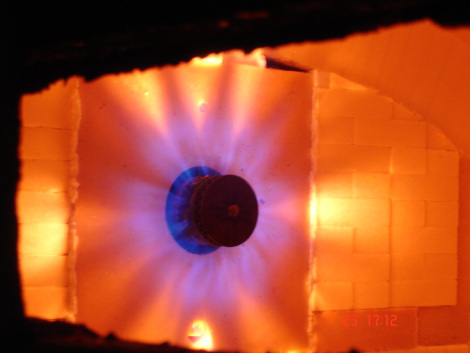
Oxy-fuel combustion and CCUS
TOTeM 52 will take place on 27th and 28th May 2026 in Essen, Germany
The International Flame Research Foundation is organising a Topic Oriented Technical Meeting (TOTeM) on Oxy-fuel combustion and CCUS.
Oxy-fuel combustion is widely studied and applied in industrial combustion processes: it is well established in high-temperature processing industries as a means to improve process efficiency and reduce pollutant emissions and is also being investigated as a preparation to facilitate carbon capture, utilisation and storage (CCUS).
This TOTeM will be hosted by GWI in Essen, Germany, and will take place over two days. The event will cover all aspects of adding oxygen in a combustion process, for gaseous, liquid or solid fuels, to partially or totally replace air, as well as carbon capture, utilisation and storage in practical applications, in particular in hard-to-abate sectors such a cement, glass, steel or power generation.
GWI guided tour
One highlight of the TOTeM will be a guided tour of GWI’s experimental facilities. GWI operates several semi-industrial combustion test rigs specifically designed to experimentally investigate industrial combustion processes, with firing rates of up to 1.2 MW and maximum furnace temperatures reaching 1 600 °C. The test rigs can be operated with a wide range of fuel gases, from natural gas to hydrogen (up to 1 MW) and ammonia (up to 300 kW). To realistically reproduce conditions in industrial furnaces, preheated air at temperatures of up to 1 200 °C can be supplied. Alternatively, experiments can be conducted with oxygen-enriched air or pure oxygen, with a maximum firing rate of approximately 400 kW in oxy-fuel operation. GWI’s combustion test rigs are designed for optimum accessibility with measurement probes or optical measurement techniques, as well as state-of-the-art emissions measurement systems. Over the years, these facilities have been used extensively in publicly funded research projects—most recently the EU project H2AL—as well as in direct cooperation with industrial partners.
Registration is now open – purchase your tickets here!
Venue
GWI – Gas- und Wärme-Institut Essen e.V.
Hafenstraße 101
45356 Essen, Germany
Participants are encouraged to travel by train; the nearest station is in Essen.
Call for speakers
Authors are invited to submit a max 300-word abstract for oral or poster presentations addressing either of the two topics, or both combined. Researchers, engineers, PhD students from industry and universities are encouraged to present their work in progress on any of these questions. Please submit any abstracts to administration@ifrf.net, using this template: IFRF-TOTeM-Author-Name-Abstract-Template.
Key dates
- 20 November 2025: Call for abstract and Registration opens
30 January 2026: Call for abstract deadline- 27 February 2026: Call for abstract extended deadline
- 13 May 2026: Deadline to send the files (presentations & poster)
- 27-28 May 2026: Event
Keynote speakers
Jörg Leicher, Research Engineer / Combustion Specialist | Gas- und Wärme-Institut Essen e. V.
Jörg Leicher studied Mechanical Engineering at the Ruhr University Bochum, Germany. He received a Ph.D. in 2006 for his work on the numerical modelling of combustion processes. From 2007 to 2008, he worked as a Post-Doc. at the Institut Français du Pétrole (IFP) in Lyon, France, before joining ANSYS Germany in Munich as a CFD support engineer. Since 2009, he has been working in the Department of Industrial Combustion Technology of Gas- und Wärme-Institut Essen e. V. (GWI) where he is currently in charge of the Numerical Simulations Group. GWI is a non-profit independent German research organization which focuses on applied research into the utilization of gaseous fuels, and a preferred research partner of IFRF.
Mr. Leicher’s professional interests include the modelling of industrial combustion processes, the impact of natural gas quality on industrial gas-fired applications and the use of alternative fuels such as hydrogen, ammonia, biogas or syngases in industrial furnaces and power plants. He is a member of several national and international committees for issues of gas utilization, natural gas quality and renewable gases.
Mario Ditaranto, chief Scientist at SINTEF Energy Research
Mario Ditaranto, Chief Scientist at SINTEF Energy Research, holds a PhD in oxy-fuel combustion for high temperature furnace applications from CORIA – Normandie Université. He has over 25 years of experience in combustion systems for gas turbines, boilers, and process furnaces, with a strong focus on CO₂-free technologies. His work includes the development of combustion systems coupled with carbon capture processes (CCS) and the use of decarbonized fuels such as hydrogen and ammonia. He leads several research R&D projects in the field, has implemented experimental facilities like HIPROX, a high pressure oxyfuel combustion facility and DEMOXYT, a micro gas turbine plant in semi-closed oxyfuel cycle. He is the Norwegian representative of the IEA TCP on Sustainable Combustion and member of several scientific committees. He authored/co-authored more than 60 publications on both fundamental and applied studies.
Patrice Font, R&I Project Manager at IFP Energies nouvelles (France)
Patrice Font is a research engineer in chemical and process engineering with over 25 years of experience in research, innovation, and project management. Since 2000, he has been contributing to IFP Energies nouvelles, where he has held various roles. Currently, as an R&I Project Manager, he oversees pioneering projects in chemical looping combustion, such as the European CHEERS project (Chinese European Emission-Reducing Solutions), collaborating with major industry and academic partners like TotalEnergies and Sintef. He is also involved in one of the PEPR SPLEEN projects dedicated to Oxycombustion.
Previously, Patrice managed a team of several members and supervised 20 pilot units at IFP Energies nouvelles, ensuring excellence in experimental facilities and team coordination. His earlier roles involved designing, modeling, and optimizing processes across domains such as catalytic reforming, hydrocracking, fluid catalytic cracking, biomass processing, and CO₂ capture. Patrice holds an engineering degree in Chemical and Process Engineering from CPE Lyon (Chimie Physique Electronique Lyon) and a post-graduate diploma (DEA – master degree) in Process Engineering from Université Claude Bernard Lyon 1.
Prof Martin Schiemann, Ruhr-University Bochum, Managing Director of the DVV
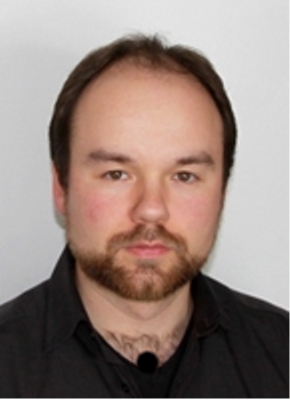
Prof. Schiemann started his career at Ruhr-University Bochum in the department of physics. After having achieved his diploma, he moved to the faculty of mechanical engineering to join the Department of Energy Plant Technology, where he finished his PhD on spray roasting processes.
Since 2012, his work group has focused on different thermal processes. Reacting particles of various kinds are the main research subject, mainly examined experimentally on the lab scale but also in larger facilities complemented by numerical simulation techniques. Finished projects on biomass-oxy-combustion were part of the collaborative research center Oxyflame, where biomass combustion was investigated from the pulverized particle to the technical plant scale. Thermal radiation research on different length-scale with experimental and numerical methods completes the profile of Prof. Schiemann’s work group.
The research results have led to 95 journal publications and a similar number of conference participations. Prof. Schiemann teaches courses on carbon capture technologies and energy plant technology supplementing his research interests. He is Managing Director of the DVV, the German branch of IFRF.
Programme
Keynote lectures
- Oxy-fuel combustion and Carbon Capture: concepts, applications and potentials in industry and power generation, Jörg Leicher, GWI, Essen
- Oxy-fuel combustion capture in selected industrial and gas power processes, Mario Ditaranto, SINTEF Energy Research, Trondheim
- Exploring CCUS: Chemical Looping Combustion as a Step Towards a Carbon-Free Energy, Patrice Font, IFP Energies nouvelles, Solaize
- Solid fuels in oxy-fuel applications, Martin Schiemann, Ruhr-University Bochum
Registration and ticket prices
| IFRF members | Non-IFRF members | |
| Academia | 300 € | 500 € |
| Industry | 450 € | 650 € |
Please click here to register via Ticket Tailor.
Due to room capacity, the event will be limited to 100 participants, registrations will close when this number is reached.
We will do our best to fulfil your requirements to allow you to fully participate in this event. Please let us know if you have any special requirements such as dietary needs, the need for a private room during the day, handouts in advance and/or in alternative formats such as Braille or large print, hearing loops, wheelchair access, high-backed chair, etc.
Hotels
For this TOTeM we have pre-booked 70 rooms at a nearby Motel One hotel in Essen which will be available to book until 14th April 2026. To book please contact the hotel and use the password ‘IFRF’.
Sponsors
This TOTeM is sponsored by:

Fives, a worldwide leader in industrial engineering, is your solution provider for steel process expertise and advanced technology. Fives partners with steel manufacturers to increase their productivity and quality, expand product portfolio and reduce emissions:
- Product, technology and market expertise
- Ultra-low NOx reheating furnaces and combustions systems
- Full range of combustion equipment and controls for all applications
- Highest efficiency radiant tube combustion systems for new or revamp applications
- Advanced digital process controls to increase profitability and improve uptime
- Process and equipment audits and services
Steel – steel@fivesgroup.com
Combustion – fna.sales@fivesgroup.com
Cancellation policy
If IFRF should have to postpone an event, IFRF shall notify you as soon as possible and provide you with a new date for the delivery of the event. If IFRF should have to cancel the event, IFRF shall provide you with a full refund of the ticket price only. Should you wish to cancel any booking of an event in advance of the event date, notice should be sent to administration@ifrf.net as soon as possible, you will be entitled to the following refund:
- More than 28 days before the event date: 100 %
- Between 22 and 28 days before the event date: 75 %
- Between 15 and 21 days before the event date: 50 %
- 14 days or less before the event date: 0 %
Posters and fast presentations
- Poster format can be A0 or A1 vertical, binder clips will be provided, a pdf version of your poster is asked for the proceedings, before xx May.
- Participant are welcome to bring a general poster on their lab activities related to the event, but please inform the organisers before.
- A fast oral presentation (3-4 min) is also required, please send the files for the presentation, and pdf for the proceedings, before 13 May 2026.
We do not provide printing service, but if you want your poster to be delivered on site, you can send it to the local contact person postal address:
Dr. Jörg Leicher
GWI – Gas- und Wärme-Institut Essen e.V.
Hafenstraße 101
45356 Essen, Germany
Sponsorship opportunities
IFRF is a research and networking hub of the global industrial combustion community. The IFRF network extends from the Americas through Europe to Central and East Asia, and to Australia, covering the power generation, petroleum refining, iron and steel, cement, glass, and chemical industries as well as combustion equipment manufacturers, fuels and industrial gas producers and distributors, research institutes and universities.
Your organisation will be able to reach a highly targeted group of industrial engineers and academics by sponsoring a conference.
Sponsorship packages
| Type | Advantages |
| *Type 1 (2500 €) | 3 tickets to the event |
| Your logo will appear on the dissemination material | |
| An advertisement space at the event | |
| *Type 2 (1500 €) | 2 tickets to the event |
| Your logo will appear on the dissemination material |
Organising committee
- Anna-Maria Pubill-Melsio – Air Liquide
- David Honoré – CNRS Coria

- Jörg Leicher – GWI
- Sébastien Caillat – Fives Stein

Additional Event Info
GWI - Gas- und Wärme-Institut Essen e.V.
Hafenstraße 101
Essen
45356