
-
Technoeconomic analysis and life cycle assessment of purification processes for captured CO2 streams
Date posted:
-
-
Post Author
Tracey Biller
-
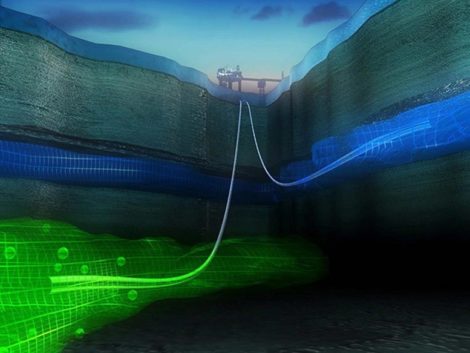
Captured carbon dioxide (CO2) streams contain impurities that must be removed to meet specifications for safe transport, storage, and utilisation. Among these impurities, oxygen poses challenges due to its high reactivity and potential to cause corrosion, motivating stringent purity limits below 10 ppmv.
Building on recent experimental demonstrations of catalytic oxygen removal using hydrogen (H2), carbon monoxide (CO), methanol (CH3OH), and methane (CH4) as reducing agents, a new study performed at the Georgia Institute of Technology, presents a technoeconomic (TEA) and life cycle assessment (LCA) of these four catalytic purification pathways.
Process flowsheets were developed and simulated in Aspen Plus for CO2 streams representative of both low-temperature and high-temperature capture processes, with integrated heat recovery and energy optimisation.
Results showed that total purification costs were dominated by feedstock procurement and electricity consumption. Among the studied reducing agents, the CH4-assisted route achieved the lowest purification cost and highest CO2 recovery. Sensitivity analyses showed that the H2 route became competitive at H2 prices below $0.56/kg to $0.84/kg, depending on the CO2 feed temperature conditions.
Environmental impacts were primarily driven by indirect CO2 emissions from raw material production and utility consumption.