
-
First electrolysers delivered to Air Liquide 200MW ELYgator project at Rotterdam
Date posted:
-
-
Post Author
Tracey Biller
-
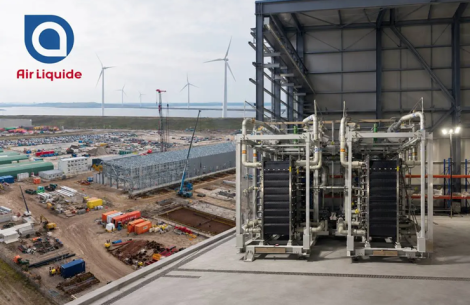
Air Liquide has received and installed the first PEM electrolyser arrays at its flagship 200MW ELYgator green hydrogen project at Maasvlakte in the Port of Rotterdam. The electrolysers are being manufactured in a joint venture between Air Liquide and Siemens Energy.
Hydrogen produced by ELYgator will be supplied to TotalEnergies’ Antwerp refinery through Air Liquide’s existing hydrogen pipelines, displacing some of the grey hydrogen used at the site. Once it comes online in 2027, ELYgator is expected to produce 23,000 tonnes of green hydrogen per year while avoiding up to 300,000 tonnes of CO₂ emissions.
Announcing the final decision to invest more than more than €500m in ELYgator in July 2025, Air Liquide acknowledged crucial support from the Dutch government through the OWE subsidy scheme, complementing prior support from the European Innovation Fund and the Dutch IPCEI program. The electrolyser was also described as “a first of its kind, integrating both Proton Exchange Membrane and Alkaline technologies on the same site.”
Emilie Mouren-Renouard, Air Liquide Group Executive Committee member and Europe activity supervisor said: “This investment decision is an important milestone and demonstrates our commitment to renewable hydrogen development. We firmly believe that robust, large-scale initiatives like ELYgator will deliver a real impact for the European industry and heavy-duty mobility sectors. We welcome the support from the Dutch Government, which has been instrumental in our decision to move forward with this significant decarbonization project. ELYgator illustrates our drive to develop concrete technologies and solutions that directly contribute to Europe’s ambitions towards climate neutrality by 2050.”
Rotterdam is rapidly emerging as one of Europe’s most important hydrogen import, production, and industrial conversion hubs. In March, Shell’s flagship 200MW Holland Hydrogen 1 electrolysis plant at Maasvlakte was connected to the first segment of the Dutch hydrogen pipeline network.