
-
IFRF-supported PhD project paper published: ‘Optimisation of chemical absorption for the decarbonisation of the iron and steel industry’
Date posted:
-
-
-
Post Author
Greg Kelsall
-
-
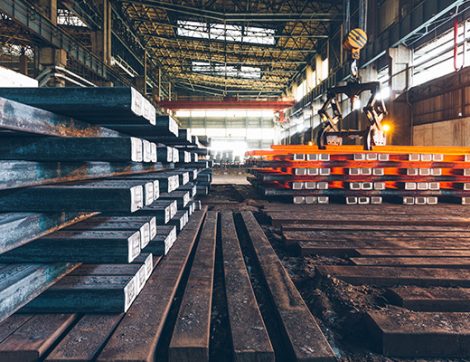
As part of a PhD project within the EPSRC Centre for Doctoral Training (CDT) in Resilient Decarbonised Fuel Energy Systems, supported by the IFRF, researcher Jack Wells at the University of Sheffield investigated the Optimisation of Chemical Absorption for the Decarbonisation of the Iron and Steel Industry.
Jack advised me that he has recently graduated from the CDT and plans to start work as a design engineer for an engineering consultancy, which I am delighted about. He has also co-authored a paper on his research which has been accepted for publication in Carbon Capture Science & Technology, Sept edition. The paper, entitled ‘Performance campaign of a chemical absorption pilot plant treating high CO2 content industrial process emissions’ is already available to view and download at ScienceDirect, with the abstract included below. A third and final paper concluding Jack’s research work is also planned for publication later this autumn.
Abstract: Decarbonisation of critical hard-to-abate industrial sectors such as the iron and steel industry is crucial for meeting climate targets, with chemical absorption carbon capture identified as a key transitional technology. However, its application is hindered by a significant knowledge gap: the absence of publicly available and transparent performance benchmarks using conventional capture systems under elevated CO2 conditions that are representative of industrial process emissions.
An experimental performance campaign was conducted on the chemical absorption pilot plant at the Energy Innovation Centre (EIC) in Sheffield, UK. The study established a novel performance baseline across a wide operating envelope for flue gas concentrations ranging from 10 to 25 mol.% CO2, achieving 90% capture efficiency using a 35 wt.% monoethanolamine (MEA) solvent. In addition, a methodology was developed to quantify solvent regeneration energy and its constituent components, complementing a system energy balance for each capture condition.
The results provided experimentally validated insight into the relationship between operating conditions, capture performance, and energy demand at elevated CO2 concentrations. The dataset established a robust baseline for conventional packed-bed systems and improved understanding of regeneration energy contributions under industrially relevant conditions.
These findings are scalable for application to the design, operation and optimisation of chemical absorption systems in heavy industries and provide a reliable benchmark for future work on advanced solvents, process intensification, and scale-up to commercial deployment.