
-
World’s first carbon refinery launches in New South Wales
Date posted:
-
-
Post Author
Tracey Biller
-
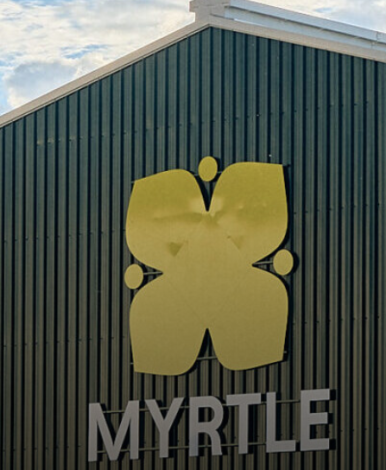
Australian clean technology company MCi Carbon has officially opened Myrtle, the world’s first fully integrated multi-purpose carbon refinery. Located on Kooragang Island in Newcastle, Myrtle is the culmination of 15 years of Australian research and development and its unveiling represents a significant milestone in industrial decarbonisation.
Myrtle uses mineral carbonation technology to transform carbon dioxide and low-value mineral feedstocks into carbon-embodied materials used in common products such as concrete, plasterboard, paint, paper, glass, and adhesives. The process permanently locks carbon into materials already widely used across global supply chains.
MCi Carbon’s technology has the potential to reduce emissions in hard-to-abate sectors by up to 90 per cent.
Unlike traditional decarbonisation approaches that are often cost-driven, the company’s model produces saleable materials, enabling emissions reduction as a commercial opportunity. The market for carbon-embedded construction materials is projected to reach US$1 trillion annually by 2050.
MCi Carbon has received more than $40 million in government funding across federal and New South Wales programs. It’s also secured more than $40 million from private investors, including Orica, one of Australia’s largest industrial manufacturers, ITOCHU Corporation, Mizuho Bank, Sumitomo Mitsui Trust Bank, Mitsubishi UBE Cement Corporation, and RHI Magnesita, which is also its first global commercial customer.
The Myrtle facility operates as a flexible carbon refinery, capable of processing diverse CO2 streams and mineral inputs such as steel slag and waste rock. The process is low pressure, low energy and produces stable carbonates with no leakage risk. It’s designed to operate either on-site at industrial facilities or as part of a regional hub model serving multiple emitters.
Orica hosts the plant at its ammonia facility, supplying CO2 and demonstrating on-site integration.
According to Green Review, heavy industry accounts for more than 30 per cent of global emissions, with cement and steel responsible for around 15 per cent. Mineral carbonation offers a pathway to permanently lock away up to 10 per cent of global emissions by embedding carbon into construction materials rather than storing it underground.
Myrtle can process up to 2,500 tonnes of CO2 annually, producing up to 10,000 tonnes of material. MCi’s first industrial-scale plant, built with RHI Magnesita at Hochfilzen, Austria, will process around 50,000 tonnes of CO2 per year.