
-
Glass Futures and University of Liverpool partner on £1.5m AI glass initiative
Date posted:
-
-
-
Post Author
Greg Kelsall
-
-
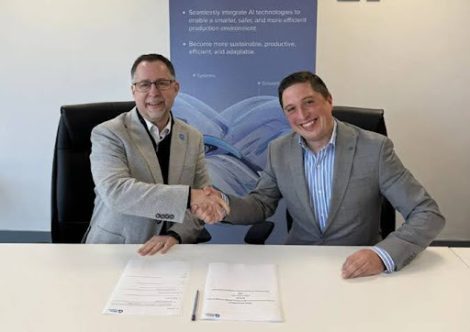
Glass Futures, one of IFRF’s preferred research partners, together with the University of Liverpool’s VEC (Virtual Engineering Centre), is launching AI Glass, a digital twin project designed to accelerate decarbonisation and drive innovation in the glass manufacturing industry. This collaboration represents a major step in sustainable manufacturing and industry digitalisation.
As part of a wider £1.5m project funded by UKRI, the AI-GLASS project will help industry partners accelerate decarbonisation efforts, improve efficiency, and adopt new low-carbon fuels and materials. Located at Glass Futures’ Global Centre of Excellence in St Helens, the project builds on the centre’s pilot furnace and research labs. AI-GLASS will deliver a virtual replica of the glass manufacturing process, integrating advanced physics modelling and artificial intelligence for sustainable technology development.
The digital environment will empower manufacturers to experiment with specific variables in the process, such as transitioning to hydrogen or biofuels, and adjusting batch compositions without disrupting production or risking equipment. The system can predict the impact on energy use, emissions, melt quality, and operating costs, enabling fast, evidence-based decision making.
AI-GLASS also features an immersive 3D digital twin of the entire Glass Futures site through a combination of BIM data, LiDAR scanning, and UAV photogrammetry. This photorealistic model will be instrumental in training, safety planning, remote walkthroughs, and visualising live process insights. It offers the tools necessary for exploring cleaner technologies like hydrogen firing and electrification safely and swiftly. By offering real-time, data-driven decision platforms, the project supports Glass Futures’ mission to lead the global transition to environmentally responsible materials production.
In addition, Glass Futures reports that they have successfully transitioned to 24/7 operations of their large-scale glass furnace and have been conducting trials of low-carbon alternatives including biofuels and hybrid electric boost.