
-
Japanese start-up produces ammonia at blue hydrogen pilot using electride catalyst
Date posted:
-
-
Post Author
Tracey Biller
-
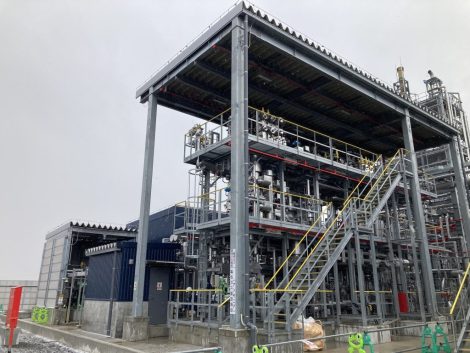
Japanese start-up Tsubame BHB Co., Ltd. has produced ammonia during a trial operation where its own electride catalyst technologies were used at a lower temperature and lower pressure than the conventional Haber–Bosch process. This is the first case in Japan for the demonstration of next-generation ammonia production using blue hydrogen (derived from Japanese natural gas) as a raw material.
The ammonia was produced at Inpex Corporation’s blue hydrogen demonstration plant in Kashiwazaki, Japan, which was opened last November.
Tsubame’s small synthesis facilities (500 tonne/p.a. ammonia production capacity), which drew praise from Inpex management for their safety and their ability to dramatically reduce pressurization power for the raw material gas, were installed for the purpose.
Inpex says the Kashiwazaki Hydrogen Park was specifically developed to support its blue hydrogen and ammonia production and utilisation demonstration test project and is the first in Japan to integrate production and use of hydrogen and ammonia. The project also adheres to the “local production for local consumption” concept: the natural gas used as a raw material is sourced from the Minami-Nagaoka Gas Field, which INPEX operates in another part of the same prefecture. CO2 generated as a byproduct during the production of hydrogen and ammonia will be injected into the reservoir of the Hirai area of the Higashi-Kashiwazaki Gas Field, where gas production has already ceased.
The hydrogen produced in this project will be used to generate electricity, which will be supplied via a power grid to end users in the prefecture. A portion of the hydrogen will also be converted into ammonia and supplied to customers residing in the area.
Tsubame aims to deploy its technology in “on-site” systems that could be installed near end-users. It says it has received orders for two units in Japan. The company intends to use data gathered by the project to inform the design of a 5,000-tonne production unit.